

INSPIRING STORY| How JIM OVIA The Founder Of Zenith Bank Started His Career As A Clerk

Jim Ovia described as the ‘Godfather of banking in Nigeria’ by Forbes Africa, is quite popular for his business dexterity and leadership skills, especially in the banking sector. A Forbes cover story on him says, “Banking is where he began life as a clerk; it was also the vehicle that carried him to his fortune.” But Jim Ovia had a life outside his banking career, and has built businesses and mentored people. So, there is actually more to Jim Ovia than Zenith Bank Plc.
Jim Ovia was born on the 4th of November, 1951 to the large family of Obi Olihe of Agbor-Obi, in Agbor, Delta State. Talking about early life challenges that could have truncated his future, Ovia wrote in his memoir: “When I was just four years old, my father—who was in his mid-fifties—suffered a massive heart attack and died several weeks later due to inadequate medical facilities. Left to fend for herself and her family, my newly widowed mother called upon her intuitive entrepreneurial skills to set up her own small trading business. “My oldest brother, who was almost twenty years my senior and working in Lagos, sent part of his wages home each month to help pay my school expenses.”
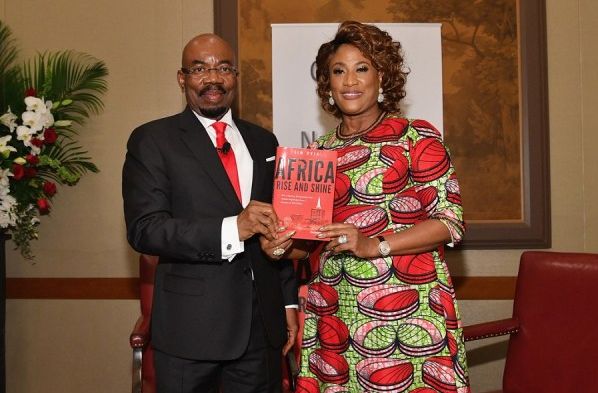
This was the condition that surrounded his early years, making him realize in time the importance of education. It later became his motivation to establish the James Hope College, a co-educational boarding school where 50% of the students are on scholarship. He attended Ika Grammar School, Bojiboji-Owa for his secondary education, before going to Lagos to join his elder brother. While in Lagos, he started his banking career in 1973 as a clerk at Union Bank, (formerly Barclays Bank) working at the branch at Oba Akran way, Ikeja. He worked for 3 years as a bank clerk before moving to USA, where he obtained his Bachelor’s and Master’s degrees.
While studying for a degree in business administration, Jim Ovia developed a keen interest in computer science and information technology, so serious that he decided to incorporate it into his program. His uncle was against this decision, believing that it would become a distraction to him. More so, technology was still considered with some skepticism at the time, and not many thought it would amount to much, but Jim held on to it. Even then, he could see that technology would in the coming decades define the way business was done. If he was studying business administration, he reasoned, it was better for him to have advance knowledge of technology rather than being caught unawares. To further equip himself, he worked as part- time computer operator at the defunct Baton Rouge Bank and Trust Company.

He returned after his degree and rejoined Union Bank of Nigeria’s branch at 121 Broadstreet, Victoria Island for his National Youth Service Corps. After his service year, Ovia joined International Merchant Bank (IMB) in 1980, working his way up from the position of financial analyst to bank manager. Jim also worked with Merchant Bank of Africa setting up the corporate division, and Lion Bank, where he rose to the post of branch manager in Lagos.
After the deregulation of the banking sector during the military administration of General Ibrahim Babangida in the late 1980s, Jim Ovia, alongside some investors, applied for a banking license. The deregulation suddenly took the exclusive right to start a bank out of the hands of foreign global financial institutions, or a federal or state government institutions, and allowed Nigerians to establish banks. All that was mandated was having a Chief Executive with at least 10 years banking experience, raising the required capital, and setting up the required physical and governance structure. Among other things, the bank had to choose its colours and logo before commencing operations.
“Some of my colleagues said we can’t use red for a bank because it signifies danger, or war. Many other banks at the time were using cooler colours like blue, but no bank ever used red before us. But I insisted because red signified power,” he later explained. In addition, he had also noticed that most developed countries and world powers, like USA, UK, Japan had red as one of the colours on their national flags, so he insisted that there must be something right about it.

As at 1990 when Zenith bank kicked off operations, there were not many buildings specifically designed for commercial or corporate purposes, so they started at a residential building which they shared with a young couple on one wing, with the bank on the other. They converted the garage to a customer service unit, and then made teller points out of the rooms, to create the first branch at Ajose Adeogun street, Victoria Island, Lagos. In time, the couple could no longer cope with the nuisance that came with being neighbours to a bank, and they moved out, giving the bank more space to operate.
As the years went by, some banks which started off at the same time were forced to merge or sell out, but Zenith stayed strong. Ovia’s peculiar interest in technology was a strong factor in favour of the bank, as he was way ahead of the others in that regard. His early interest in technology was the reason Zenith bank became the first Nigerian company to have a functional website in 1995, and was able to smoothly migrate its operations from the analogue times to a technological era.

From a single branch in a residential building, Zenith bank now has hundreds of branches all over Nigeria, and several subsidiaries in other countries. The bank became a Public Limited Company in 2001 and was listed on the Nigeria Stock Exchange (NSE), and later on the London Stock Exchange (LSE). On 27th of April 2007, Zenith Bank Plc became the first Nigerian bank in 25 years to be licensed by the UK Financial Services Authority (FSA), giving rise to Zenith Bank UK Limited.